
Self-cleaning glass roof lanterns
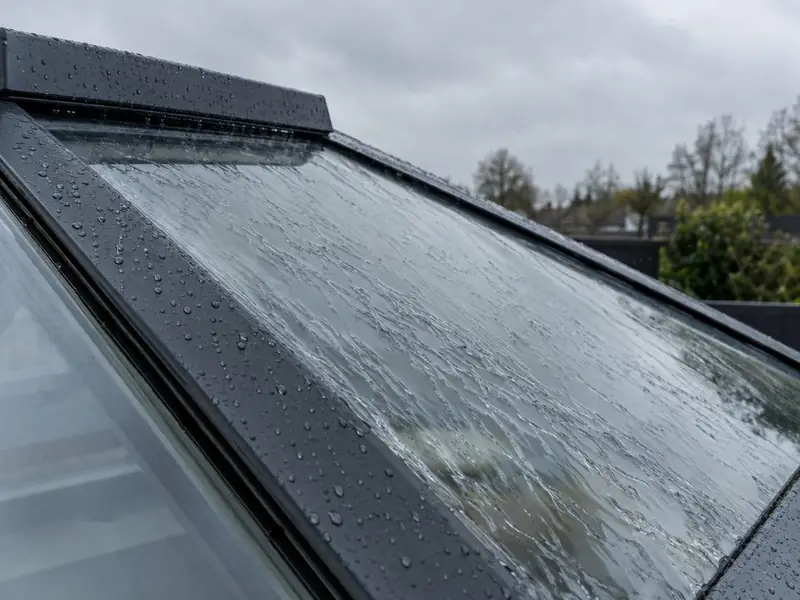
Self-cleaning glass has a thin coating on the outer surface that does two things: daylight helps it break down organic dirt, and rain then spreads into a sheet rather than droplets, carrying the loosened dirt away. It is standard on most lantern ranges and is especially useful on glass you cannot easily reach.
Get a price for a self-cleaning glass roof lantern
Send your kerb size and we will reply with a fixed written quote.
In short: A coated outer pane that breaks down dirt in daylight and lets rain wash it away. Guide prices start from £1,295 including VAT, supply only.
How well does self-cleaning glass work?
It reduces cleaning rather than ending it. It works best on glass that sees daylight and regular rain, which a sloping lantern does. Heavy deposits, bird droppings and sap still need a gentle rinse with clean water now and then.
Never use abrasive pads, harsh chemicals or silicone-based products on the coated surface: they can damage the coating. The care guide that comes with your lantern lists what is safe.
Which tint should I choose?
Self-cleaning glass usually comes in clear, blue or neutral tints. Blue and neutral tints also reduce solar heat gain. Clear lets the most light through. Our glass guide compares them.
What does it cost?
On most ranges self-cleaning glass is included as standard, so guide prices below already include it.
Self-cleaning glass roof lantern prices by size
| Kerb size | Roof area | Guide price | Configure |
|---|---|---|---|
| 1000 × 1500 mm | 1.50 m² | £1,295–£1,495£1,079 ex VAT from | Configure |
| 1000 × 2000 mm | 2.00 m² | £1,495–£1,795£1,246 ex VAT from | Configure |
| 1500 × 2000 mm | 3.00 m² | £1,995–£2,295£1,662 ex VAT from | Configure |
| 1500 × 2500 mm | 3.75 m² | £2,295–£2,695£1,912 ex VAT from | Configure |
| 2000 × 3000 mm | 6.00 m² | £3,195–£3,695£2,662 ex VAT from | Configure |
| 2000 × 4000 mm | 8.00 m² | £4,095–£4,795£3,412 ex VAT from | Configure |
Guide prices include VAT at 20%, supply only, aluminium with self-cleaning double glazing in a stock colour. Your fixed price is confirmed in writing on your quote before you order.
What you get
- Coating
- On the outer face of the outer pane
- Works with
- Daylight plus rain
- Tints
- Clear, blue or neutral
- Cleaning
- Occasional rinse with clean water
- Avoid
- Abrasives, harsh chemicals, silicone products
Three checks
- Measure the outside of the kerb, width then length, and check the diagonals. How to measure.
- Check the glazing allowance for your extension and whether you need planning permission. See building regulations and planning.
- Plan the lift. Your quote gives the approximate weight so your installer can plan access and lifting.
Self-cleaning glass roof lanterns: common questions
Do I still need to clean self-cleaning glass?
Occasionally. It keeps the glass cleaner for longer, but heavy dirt and droppings still need a gentle rinse, especially in dry spells.
Is self-cleaning glass the same as solar-control glass?
No. Self-cleaning is a coating that sheds dirt; solar control reduces heat gain. Many lantern units combine both.
Does it work under trees?
Less well. Sap and leaf debris build up faster than daylight and rain can deal with them, so lanterns under trees need more regular rinsing.
Can the coating be damaged?
Yes, by abrasive cleaning, some chemicals and silicone. Follow the care instructions supplied with your lantern.
Self-cleaning glass roof lanterns by area
We deliver self-cleaning glass roof lanterns across mainland Britain. Choose your area for local delivery and regulation notes.
England
- Bedfordshire
- Berkshire
- Bristol
- Buckinghamshire
- Cambridgeshire
- Cheshire
- Cornwall
- Cumbria
- Derbyshire
- Devon
- Dorset
- County Durham
- East Riding of Yorkshire
- East Sussex
- Essex
- Gloucestershire
- Greater London
- Greater Manchester
- Hampshire
- Herefordshire
- Hertfordshire
- Isle of Wight
- Kent
- Lancashire
- Leicestershire
- Lincolnshire
- Merseyside
- Norfolk
- North Yorkshire
- Northamptonshire
- Northumberland
- Nottinghamshire
- Oxfordshire
- Rutland
- Shropshire
- Somerset
- South Yorkshire
- Staffordshire
- Suffolk
- Surrey
- Tyne and Wear
- Warwickshire
- West Midlands
- West Sussex
- West Yorkshire
- Wiltshire
- Worcestershire
Wales
Scotland
- Aberdeen and Aberdeenshire
- Dundee and Angus
- Argyll and Bute
- Ayrshire
- Dumfries and Galloway
- Edinburgh and the Lothians
- Fife
- Forth Valley
- Greater Glasgow
- Highlands and Islands
- Lanarkshire
- Moray
- Perth and Kinross
- Scottish Borders