
Traditional roof lanterns
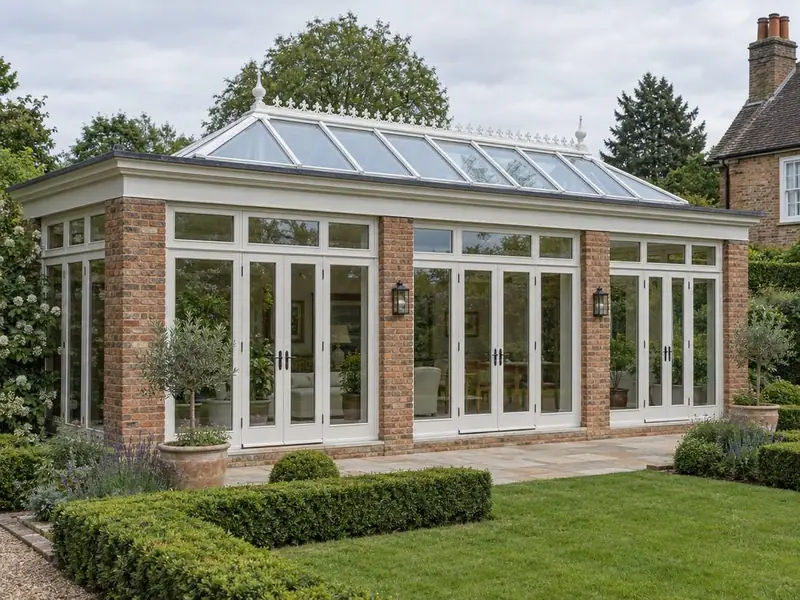
Traditional roof lanterns borrow from Victorian glasshouses: more glazing bars, a decorative ridge cresting and finials at each end. They suit period houses, orangeries and any extension where the lantern should look like it has always been there.
Get a price for a traditional roof lantern
Send your kerb size and we will reply with a fixed written quote.
In short: Victorian-style detailing with ridge cresting and finials for period homes. Guide prices start from £1,495 including VAT, supply only.
What details make a lantern traditional?
The usual features are closer-spaced glazing bars, a decorative cresting along the ridge and turned finials. Some ranges add a deeper cornice where the lantern meets the upstand. The frame is still modern aluminium, so you get the period look with a thermally broken frame and sealed double glazing.
White and off-white are the classic finishes, with heritage greens and greys on request.
Is a traditional lantern right for a listed building?
Possibly, but listed buildings need listed building consent for most external changes, and conservation areas can have their own rules. Speak to your council before ordering. We can supply drawings and specification sheets for your application once you have a quote.
What does a traditional lantern cost?
Cresting, finials and extra bars add to the price compared with a plain rectangular lantern of the same size. Guide prices below include VAT.
Traditional roof lantern prices by size
| Kerb size | Roof area | Guide price | Configure |
|---|---|---|---|
| 1000 × 1500 mm | 1.50 m² | £1,495–£1,795£1,246 ex VAT from | Configure |
| 1000 × 2000 mm | 2.00 m² | £1,795–£2,095£1,496 ex VAT from | Configure |
| 1500 × 2000 mm | 3.00 m² | £2,295–£2,695£1,912 ex VAT from | Configure |
| 1500 × 2500 mm | 3.75 m² | £2,595–£2,995£2,162 ex VAT from | Configure |
| 2000 × 3000 mm | 6.00 m² | £3,695–£4,295£3,079 ex VAT from | Configure |
| 2000 × 4000 mm | 8.00 m² | £4,695–£5,495£3,912 ex VAT from | Configure |
Guide prices include VAT at 20%, supply only, aluminium with self-cleaning double glazing in a stock colour. Your fixed price is confirmed in writing on your quote before you order.
What you get
- Style
- Victorian-inspired, closer glazing bars
- Ridge
- Decorative cresting with end finials
- Frame
- Powder-coated aluminium
- Colours
- White, cream, heritage shades or any RAL
- Uses
- Orangeries, period homes, conservatory replacements
Three checks
- Measure the outside of the kerb, width then length, and check the diagonals. How to measure.
- Check the glazing allowance for your extension and whether you need planning permission. See building regulations and planning.
- Plan the lift. Your quote gives the approximate weight so your installer can plan access and lifting.
Traditional roof lanterns: common questions
Can I have cresting without finials, or the other way round?
Usually yes. Ranges treat cresting and finials as options. Tell us what you want and the quote will list each item.
Is a traditional lantern harder to clean?
There are more bars, so there are more edges for dirt to collect along. Self-cleaning glass helps, but a gentle rinse once or twice a year is still worthwhile.
Will a traditional lantern need planning permission?
The style does not change the planning position; size, height and location do. Listed buildings and conservation areas are the main cases where consent is more likely to be needed.
Do you make timber traditional lanterns?
Our range is aluminium and uPVC. Aluminium can be powder-coated in heritage colours that suit timber windows and doors.
Traditional roof lanterns by area
We deliver traditional roof lanterns across mainland Britain. Choose your area for local delivery and regulation notes.
England
- Bedfordshire
- Berkshire
- Bristol
- Buckinghamshire
- Cambridgeshire
- Cheshire
- Cornwall
- Cumbria
- Derbyshire
- Devon
- Dorset
- County Durham
- East Riding of Yorkshire
- East Sussex
- Essex
- Gloucestershire
- Greater London
- Greater Manchester
- Hampshire
- Herefordshire
- Hertfordshire
- Isle of Wight
- Kent
- Lancashire
- Leicestershire
- Lincolnshire
- Merseyside
- Norfolk
- North Yorkshire
- Northamptonshire
- Northumberland
- Nottinghamshire
- Oxfordshire
- Rutland
- Shropshire
- Somerset
- South Yorkshire
- Staffordshire
- Suffolk
- Surrey
- Tyne and Wear
- Warwickshire
- West Midlands
- West Sussex
- West Yorkshire
- Wiltshire
- Worcestershire
Wales
Scotland
- Aberdeen and Aberdeenshire
- Dundee and Angus
- Argyll and Bute
- Ayrshire
- Dumfries and Galloway
- Edinburgh and the Lothians
- Fife
- Forth Valley
- Greater Glasgow
- Highlands and Islands
- Lanarkshire
- Moray
- Perth and Kinross
- Scottish Borders