
Do you need an opening vent in a roof lantern?
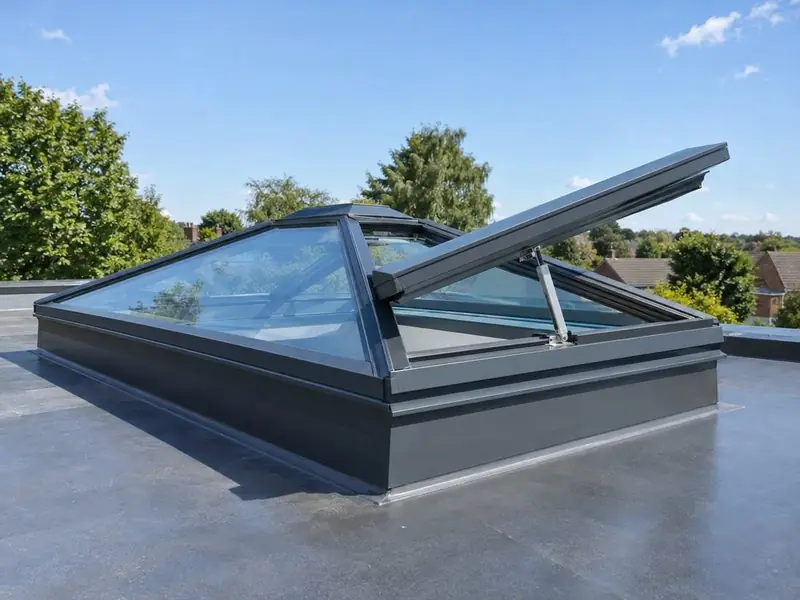
When an opening vent is worth having, how electric vents and rain sensors work and how lantern ventilation fits with building regulations.
Not always. A vent is most useful in large lanterns over kitchens and living spaces, especially south and west-facing ones, where warm air builds up at the top of the room.
How do electric vents work?
A motorised actuator opens one glazed panel by a set distance. Control is usually by wall switch or remote, and a rain sensor can close the vent automatically. The actuator needs a power supply installed by a competent electrician.
Does a vent count towards building regulations ventilation?
It can contribute to purge ventilation in some designs, but this depends on the opening area and how the rest of the room is ventilated. If your approval relies on it, your designer will specify the vent size and your building control body will check it.
Other ways to keep air moving
- Opening doors or windows low down, so cool air comes in as warm air leaves.
- Trickle vents and extract fans for everyday background ventilation.
- Solar-control glass to reduce the heat that needs removing in the first place.
Sources
Written by the Buy Roof Lanterns team. Last reviewed 19 October 2026. General guidance only; your designer, building control body or council confirms what applies to your project.