
Why does my roof lantern get condensation?
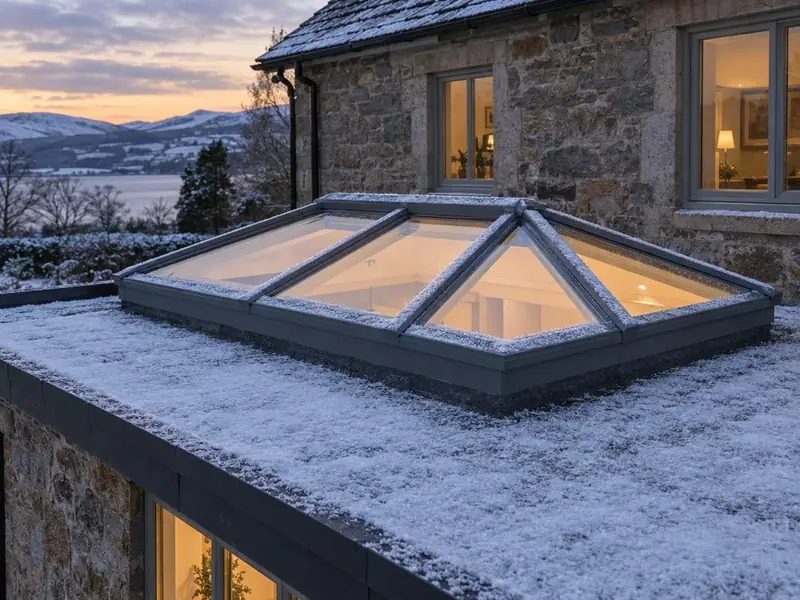
Why condensation forms on lanterns, why new extensions are worst in the first year and the practical steps that reduce it.
Condensation forms when warm, moist air meets a cooler surface. A lantern is the highest and often the coolest surface in the room, so if the air is humid, it shows there first.
Why is it worse in a new extension?
New plaster, screed and concrete release a lot of water as they dry, often for many months. Condensation in the first winter is common and usually reduces as the building dries out, especially with good ventilation.
How to reduce it
- Ventilate: use cooker hood and bathroom extract fans and keep trickle vents open.
- Heat steadily rather than in short bursts.
- Avoid drying laundry under the lantern.
- Open the lantern vent or a window for a short time after cooking or showering.
- Make sure the upstand reveal is insulated; cold reveals are a common source.
Condensation between the panes
Misting inside a double glazed unit is different: the unit's seal has failed and the unit needs replacing. Contact the supplier of the lantern with photos.
Triple glazing and warm-edge spacers keep the inner surface warmer, which reduces the conditions for condensation. They help, but ventilation matters most.
Written by the Buy Roof Lanterns team. Last reviewed 19 October 2026. General guidance only; your designer, building control body or council confirms what applies to your project.