Which glass is best for a roof lantern?
Self-cleaning, solar-control, triple glazing and laminated glass compared, with what each costs and which rooms benefit most.
Glass is the biggest decision after size. It decides how warm the room gets in summer, how much heat it loses in winter, how often you clean the roof and how noisy rain sounds.
| Glass | What it does | Best for | Guide cost |
|---|---|---|---|
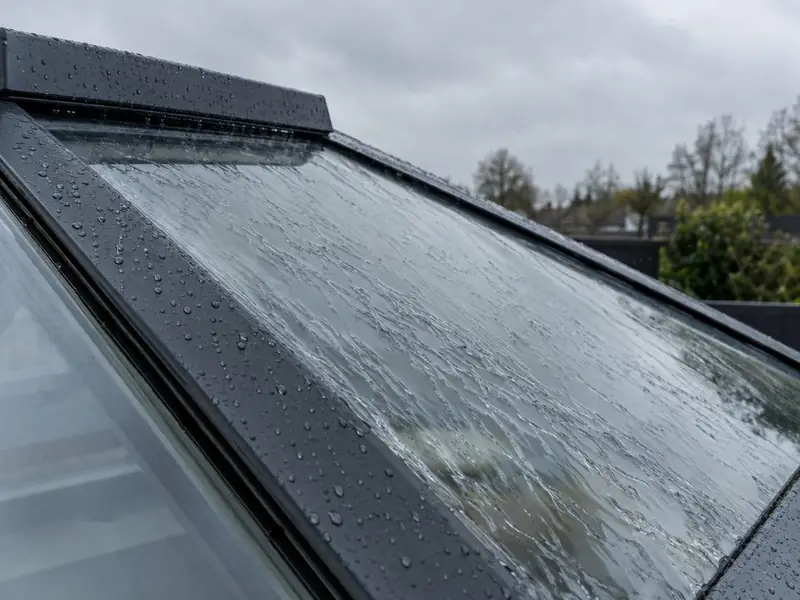
| Self-cleaning double glazing | Coated outer pane loosens dirt; rain washes it off | Most lanterns | Usually standard |
| Solar-control double glazing | Lower g-value, less summer heat and glare | Large, south or west-facing lanterns | About +10% |
| Triple glazing | Lower U-value, warmer inner pane, quieter | Cold or exposed sites, bedrooms, offices | About +40% |
| Laminated inner pane | Holds together if broken; quieter | Over seating, kitchens and play areas | Range dependent |
Clear, blue or neutral?
Clear glass lets the most light through. Blue tints are a common solar-control finish and give the sky a slightly deeper colour. Neutral tints control heat while keeping colours inside natural. If in doubt, choose neutral solar control for big lanterns and self-cleaning clear for small ones.
What do g-value and U-value mean?
- U-value: heat lost through the lantern in winter. Lower is better.
- g-value: share of the sun's energy that gets through. Lower means a cooler room in summer.
- Light transmission: share of visible light that gets through. Higher means brighter.
We include the manufacturer's figures for your chosen glass on your quote so you can compare like for like.
Written by the Buy Roof Lanterns team. Last reviewed 19 October 2026. General guidance only; your designer, building control body or council confirms what applies to your project.