
How should a roof lantern upstand be built?
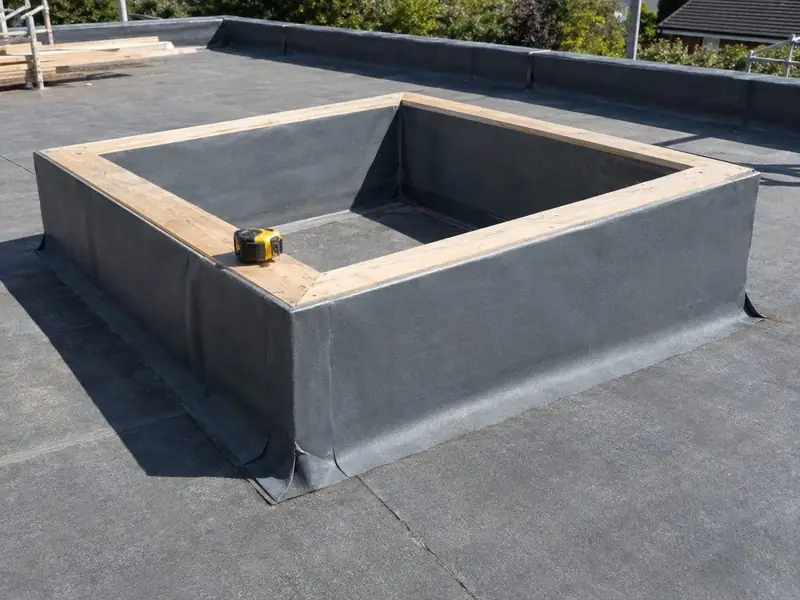
Height, size, insulation and waterproofing: what a roof lantern kerb needs, and the difference between timber kerbs and insulated upstands.
The upstand, or kerb, is the raised frame the lantern sits on. It carries the lantern, keeps water out and forms the link between roof and glazing. Get it right and the lantern is easy to fit and stays dry.
What does a good upstand need?
- The exact external size of the lantern, square, with equal diagonals.
- A level top on all four sides.
- Enough height above the finished roof to keep water off the lantern seal; manufacturers commonly ask for at least 150 mm.
- Insulation to limit cold bridging and condensation around the opening.
- The roof membrane turned up and sealed on the outside, to the roof system's own details.
Timber kerb or prefabricated upstand?
A site-built timber kerb, usually in treated timber, is flexible and inexpensive but relies on the builder to get it square, level and insulated. A prefabricated insulated upstand arrives to size and square, pre-insulated, and the roofer dresses the membrane onto it. Many people order the upstand with the lantern so they match.
Inside: the plaster return
Inside, the reveal between ceiling and lantern is usually lined with plasterboard. Insulating behind it and including a vapour control layer where the roof build-up needs one helps prevent condensation.
Written by the Buy Roof Lanterns team. Last reviewed 19 October 2026. General guidance only; your designer, building control body or council confirms what applies to your project.